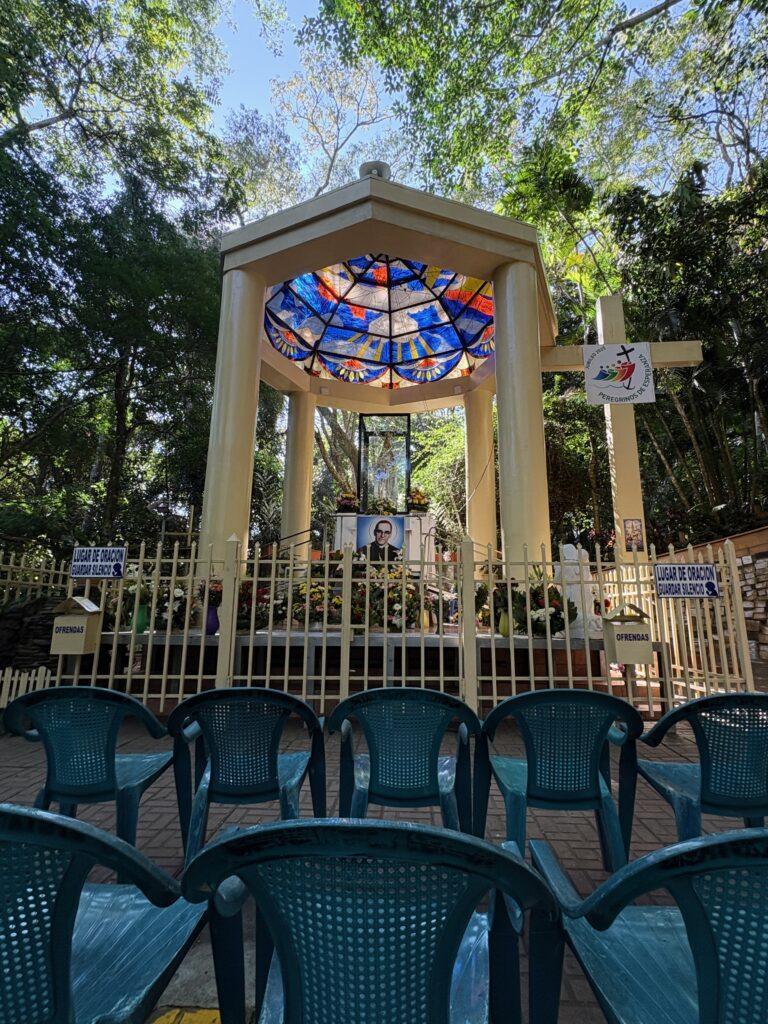
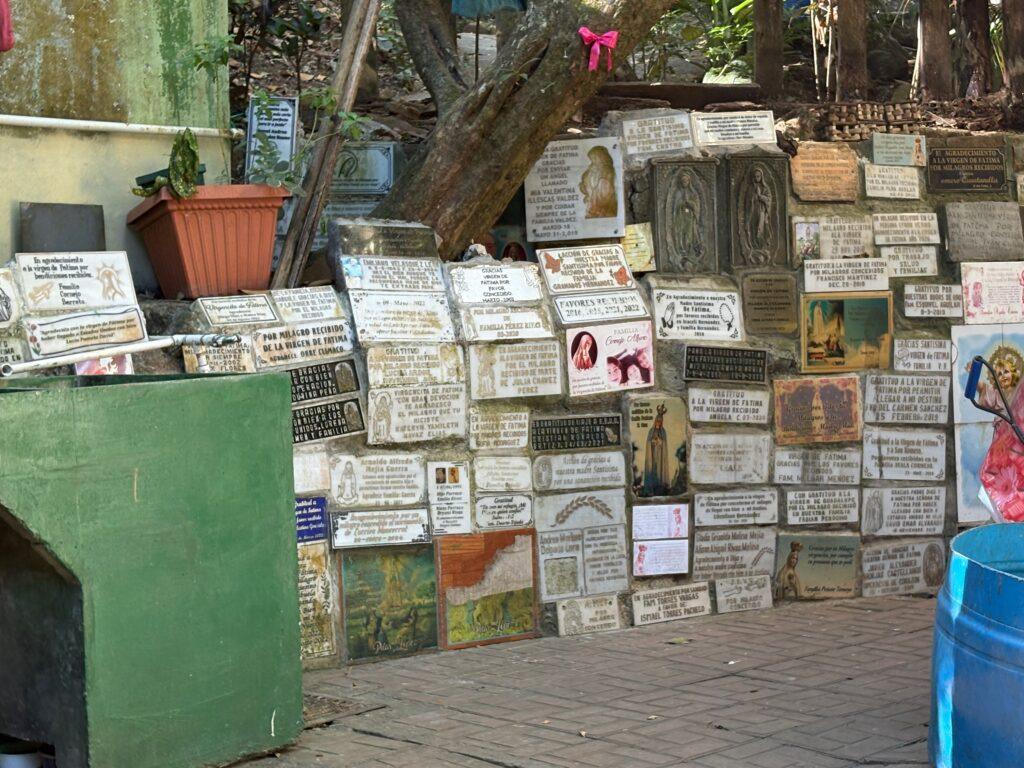
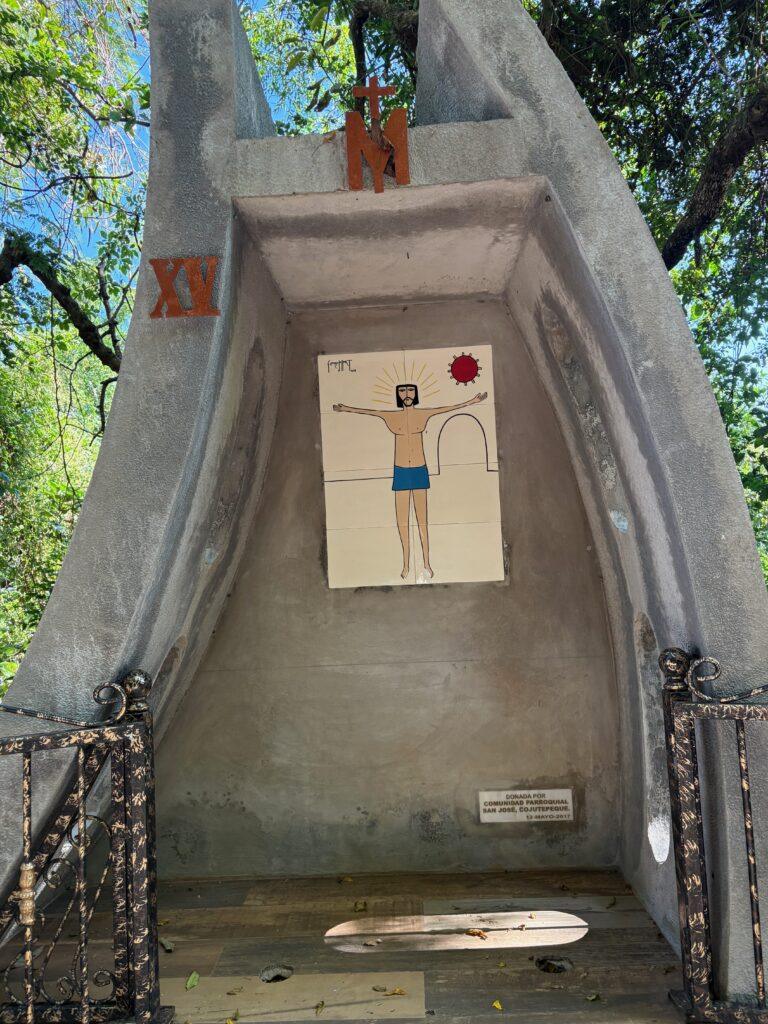
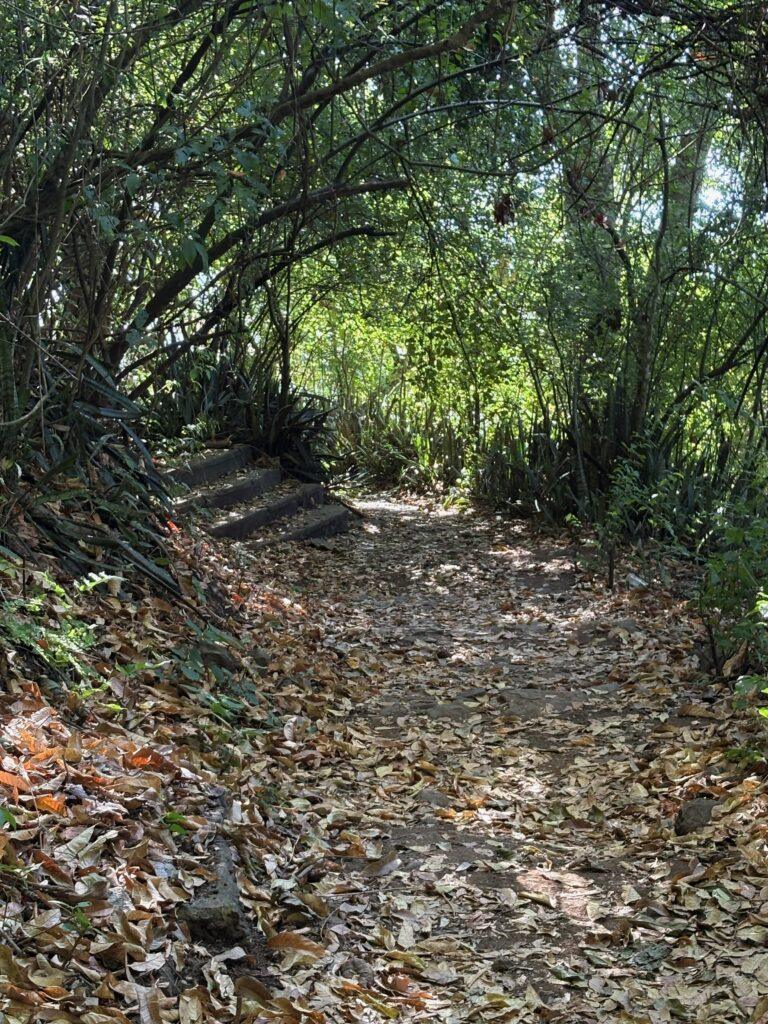
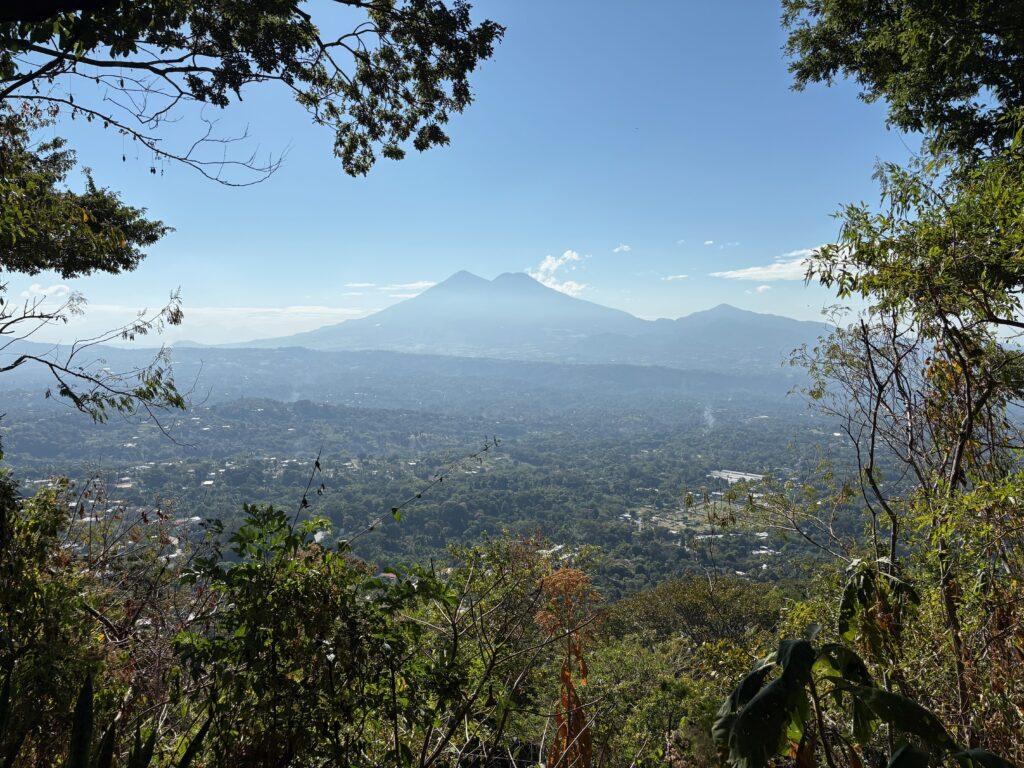
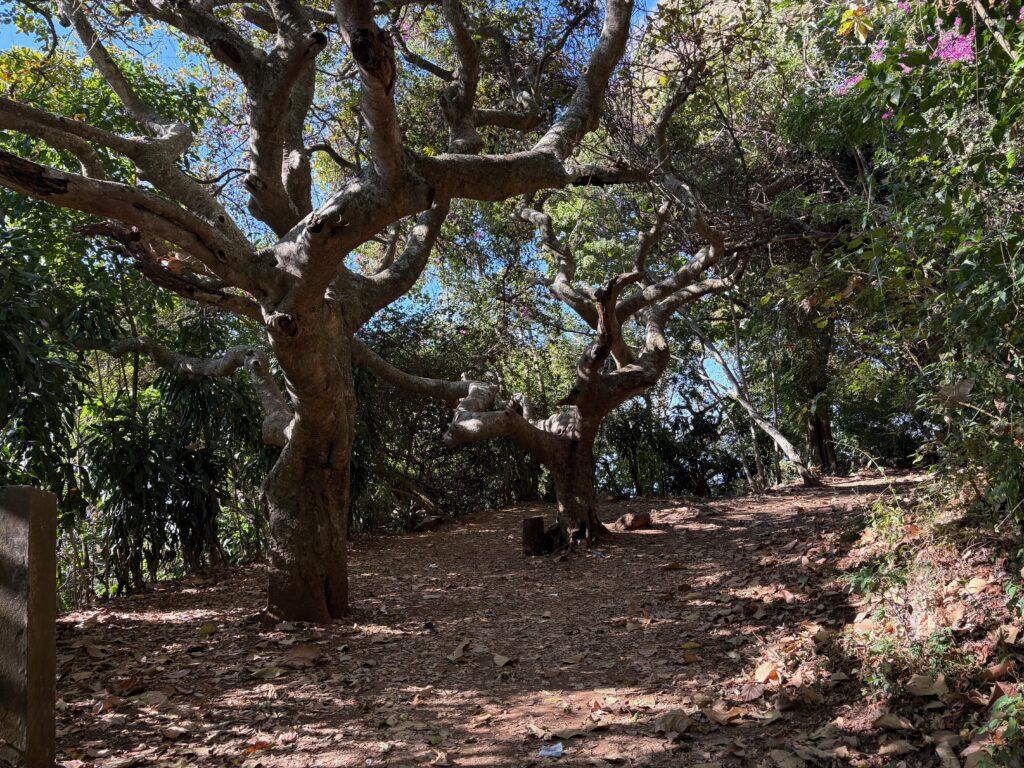
I’m sitting here enjoying a cup of coffee and eating pupusas for dinner. It’s raining, which is surprising because it’s the dry season. Many who grew up here tell me the weather patterns have changed a lot since they were younger. The rainy season was supposed to end by the end October, but although the frequency and intensity of rain decreased significantly, it still rained into November and here we are in January with a rainy evening. This morning was clear though and my wife and I finally went hiking as we had planned to do for a while. Our goal is to climb the Santa Ana volcano in the National Park there (Parque Nacional de los Volcanes), but since we have not hiked recently, we are getting back into the practice so we can do this together. Today we started small with a 1-hour hike in a park on a hill within Cojutepeque called Cerro de las Pavas, which is Spanish for Hill of the Turkeys. An interpretive sign at the park said that Cojutepeque is a Nawat place name. Nawat is an endangered language that was the language of the Pipil indigenous people who populated central and western El Salvador at the time of the Spanish conquest. The place names in central El Salvador are either Spanish (like “El Salvador”) or they’re from Nawat. Nawat is closely related to the Aztec language family because the Pipil migrated from what is today central Mexico and the Gulf Coast region 400 years before the Spanish arrived. The Pipil displaced earlier Mayan inhabitants who remained in the greater region, but not as much in what became El Salvador. The word “Cojutepeque” (the place we visited today to go hiking) means “Hill of the Turkeys” with the ending “-tepeque” meaning hill or mountain. Other Savaldoran place names are based on Nawat words, such as “-tlan” which means “place of” and “-tenango” which means “place of walls or fortifications”. Examples include “Cuscatlán” and “Chalatenago”. The Cerro de las Pavas park has trails and some various comedors located almost in the park, which are called “Merenderos”. A comedor is a diner of sorts, but is really just a small, often unlicensed business where people cook familiar local foods for sale. Many are bigger and more like a restaurant as we would know it in the US. A merendero is comedor in an outdoor setting, so when we were hiking we found people had set up tables and were cooking basically in the forest and that is what merenderos are. There is also a Catholic shrine in the forest called La Gruta de la Virgen de Fatima. The shrine is dedicated to the Virgin Mary, but also to a series of events that are recognized by the Catholic Church as having occurred in 1917 in Portugal related to three children being visited by the Virgin. The site in Cojutepeque was chosen in 1949 and has a statue (i.e. image) of the Virgin Mary that is from Spain. An original was at the site, carved in Portugal, but was damaged in an earthquake and the one from Spain is a replacement. Pilgrimages take place there in May and October and the site was declared historic by the EL Salvador legislature. If you look at the photo below, you’ll see a photo of a man on the shrine. The man is Monseñor Oscar Romero who was the Archbishop of El Salvador and was assassinated in 1980 at the beginning of the Salvadoran civil war.